
There is a tendency in woodworking to accumulate tools before learning to use them well. This guide takes the opposite approach: a compact set of hand tools that, used with intention, handles most beginner and intermediate projects without requiring a large investment or significant storage space.
The tools listed here are available in Canada through Lee Valley Tools, Canadian Tire, Home Depot Canada, and Rona, with notes on what to prioritize when evaluating quality at different price points.
Measuring and Layout
Accurate layout is the precondition for accurate cuts. Errors here propagate through every subsequent step.
Combination Square
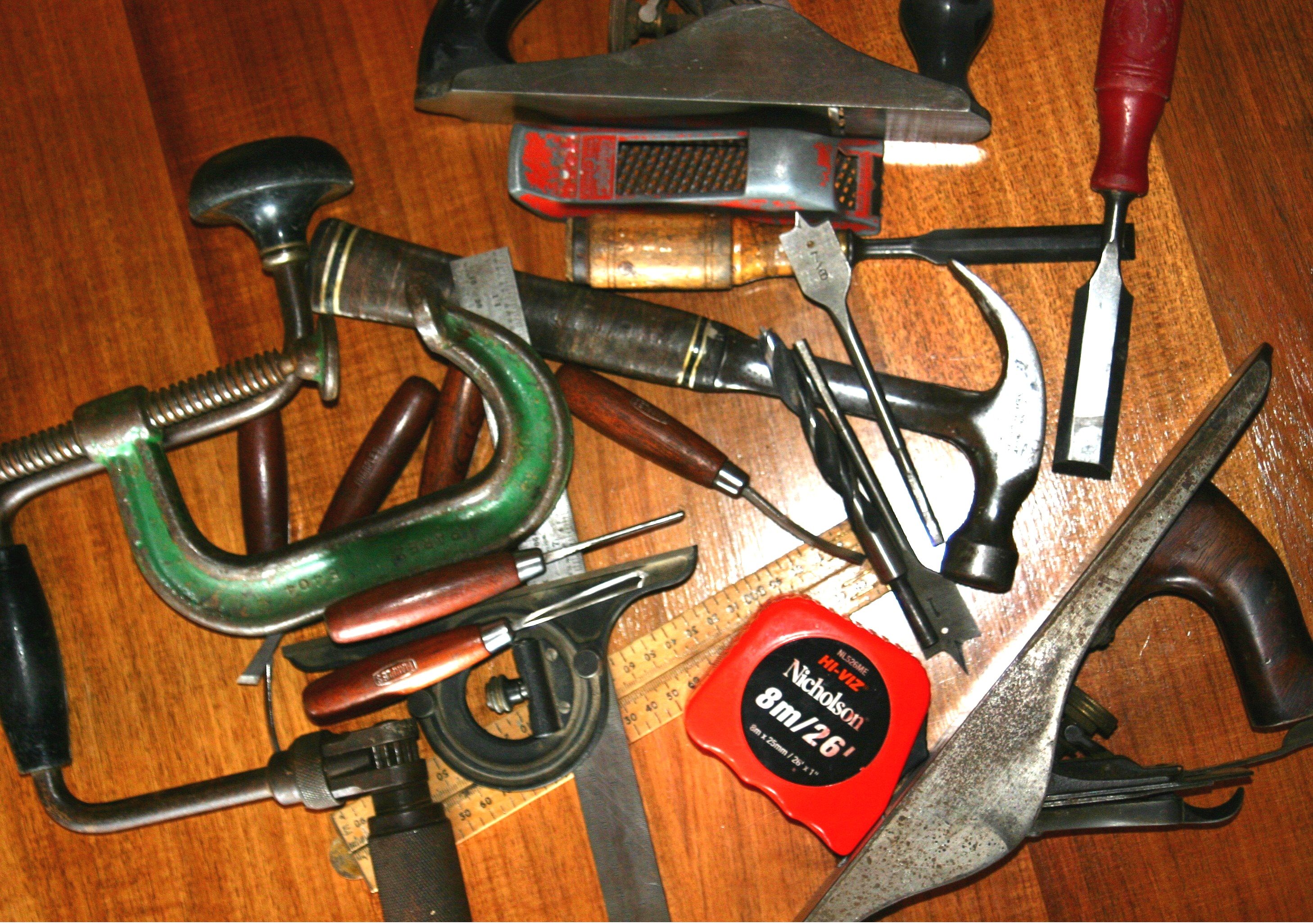
A 300 mm (12") combination square checks and marks 90° and 45° angles, measures depth, and scribes lines parallel to an edge. It replaces a try square, a miter square, and a marking gauge for most beginner work. Starrett and Veritas (the Lee Valley house brand) produce well-calibrated squares at different price points. Before buying, verify that the blade reads true at 90° by marking a line on a flat surface, flipping the square, and checking whether the blade aligns exactly with the mark.
Marking Knife
A knife line cut with a marking knife severs wood fibres cleanly, producing a reference line that a pencil cannot match. For dovetails, mortises, and tenons, this precision matters. A simple Mora or Crown marking knife is adequate. The geometry of the bevel — single bevel for working against a straightedge — affects how the knife registers in use.
Tape Measure and Ruler
A 5 m tape measure with a firm lock and a clear blade covers rough measuring. A 300 mm steel rule is more accurate for layout work at the bench. In Canada, both imperial and metric markings are common, given that dimensional lumber is sold in imperial but many tools are calibrated in metric.
Saws
Panel Saw (Rip and Crosscut)
A 550 mm handsaw with 8–10 points per inch (PPI) handles crosscutting dimensional lumber and sheet goods. Japanese pull saws cut on the pull stroke and produce a thinner kerf than Western-style push saws, which reduces effort and drift. The Suizan and Gyokucho saws available through Amazon Canada are reliable entry-level options.
Dovetail Saw or Tenon Saw
For joinery, a back saw (rigid spine above the blade) with 14–18 PPI produces accurate cuts in hardwood. The stiff back prevents the blade from wandering under load. Veritas and Lie-Nielsen make backed saws in the mid-to-upper price range. Cheap back saws often have inconsistent tooth geometry; checking reviews before purchasing saves frustration.
Hand Planes
No. 4 Bench Plane
The No. 4 smoothing plane (sole approximately 250 mm) flattens surfaces, removes mill marks, and produces a finish that no sandpaper replicates. A well-tuned No. 4 is the most versatile tool in bench work. Stanley and Irwin make affordable No. 4 planes widely available in Canada, though they require flattening the sole and back of the iron before they perform well. Lee Valley's Veritas No. 4 and the Lie-Nielsen No. 4 are manufactured to tighter tolerances and need less preparation, at higher cost.
The primary task when setting up a new plane is establishing a flat back on the iron (blade). This is done by working through grits of sandpaper or waterstone on a flat surface — typically starting at 120 grit and finishing at 1000–2000 grit. A flat back and a sharp, polished bevel produce the shaving action that makes hand planing effective.
Router Plane
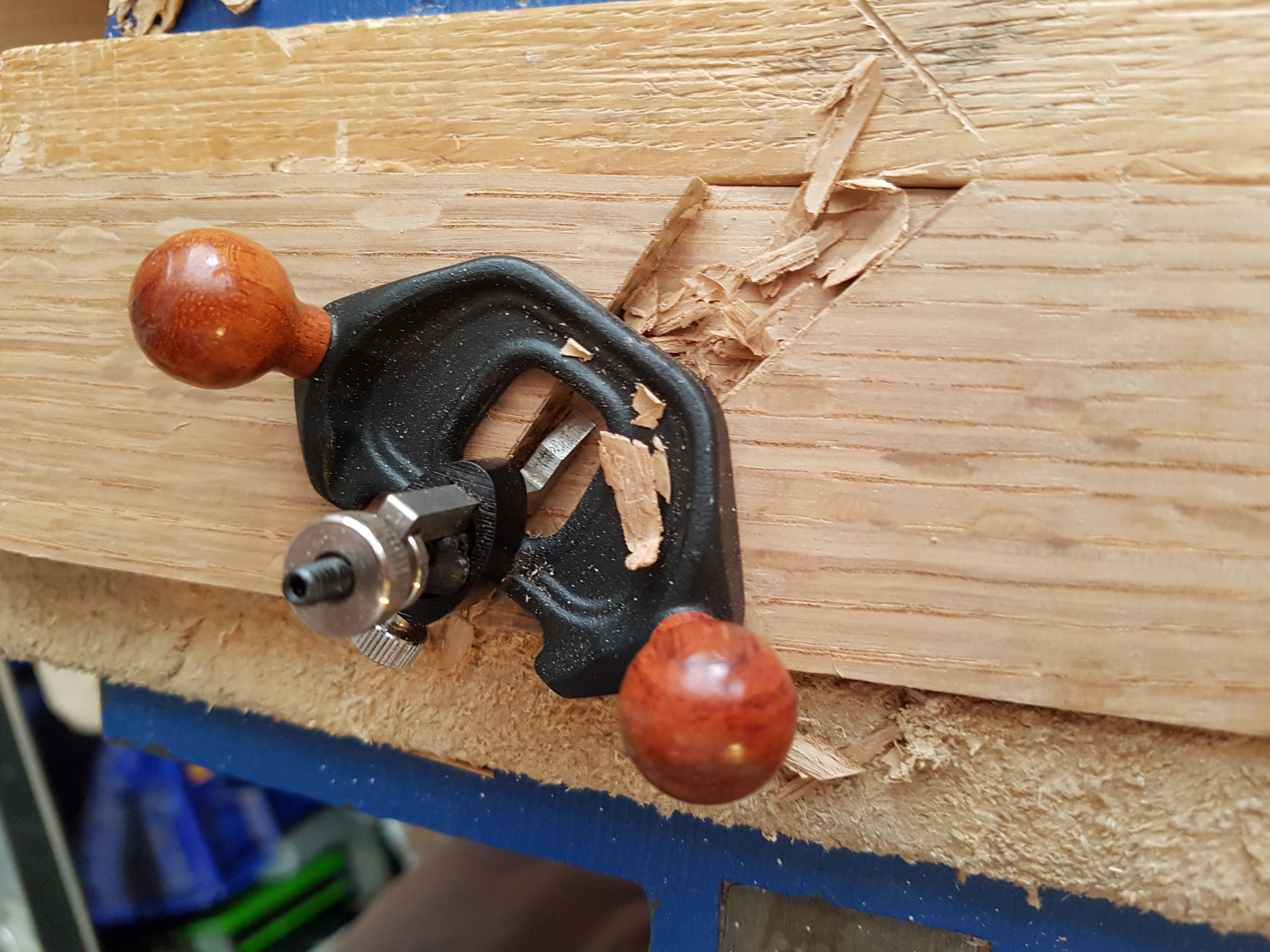
A router plane cuts to a consistent depth in dadoes, housing joints, and the floors of mortises. For hand-tool joinery, it is one of the most useful specialty planes. Veritas and Lie-Nielsen both offer router planes; the Veritas Large Router Plane has wider capacity and more adjustability for the price.
Chisels
A set of four bench chisels in 6, 12, 19, and 25 mm covers paring, chopping mortises, and cleaning joints. The priority is steel quality: a chisel that holds an edge longer reduces the time spent at the sharpening station. Narex chisels (Czech manufacture, widely available through online retailers in Canada) offer good steel quality at a reasonable price. The backs must be flattened before first use, same as plane irons.
A mallet for driving chisels should have enough mass to deliver clean blows without requiring excessive swing force. A 350–450 g wooden or poly mallet works for most bench chopping.
Sharpening
Sharpening is not optional. Dull tools require more force, produce ragged cuts, and are more difficult to control. A simple sharpening setup for a beginner consists of:
- A coarse waterstone (220–400 grit) for reshaping damaged edges
- A medium waterstone (1000 grit) for establishing the bevel
- A fine waterstone or strop (2000–8000 grit or leather with compound) for polishing
A honing guide holds the iron at a consistent angle while working it across the stone. This is particularly useful when learning, as freehand honing requires practice to produce repeatable results. King brand waterstones are manufactured in Japan and available at Lee Valley; they represent a balanced cost-to-performance option in Canada.
Clamps
Clamps hold glue-ups while adhesive cures and function as a third hand during layout. F-style clamps (bar clamps with a sliding head) in 150, 300, and 600 mm lengths cover most beginner clamping needs. Parallel jaw clamps apply even pressure across a face, which matters when gluing up panels. Canadian Tire's house-brand clamps are functional for light work; Bessey and Jorgensen are preferred for heavier clamping.